
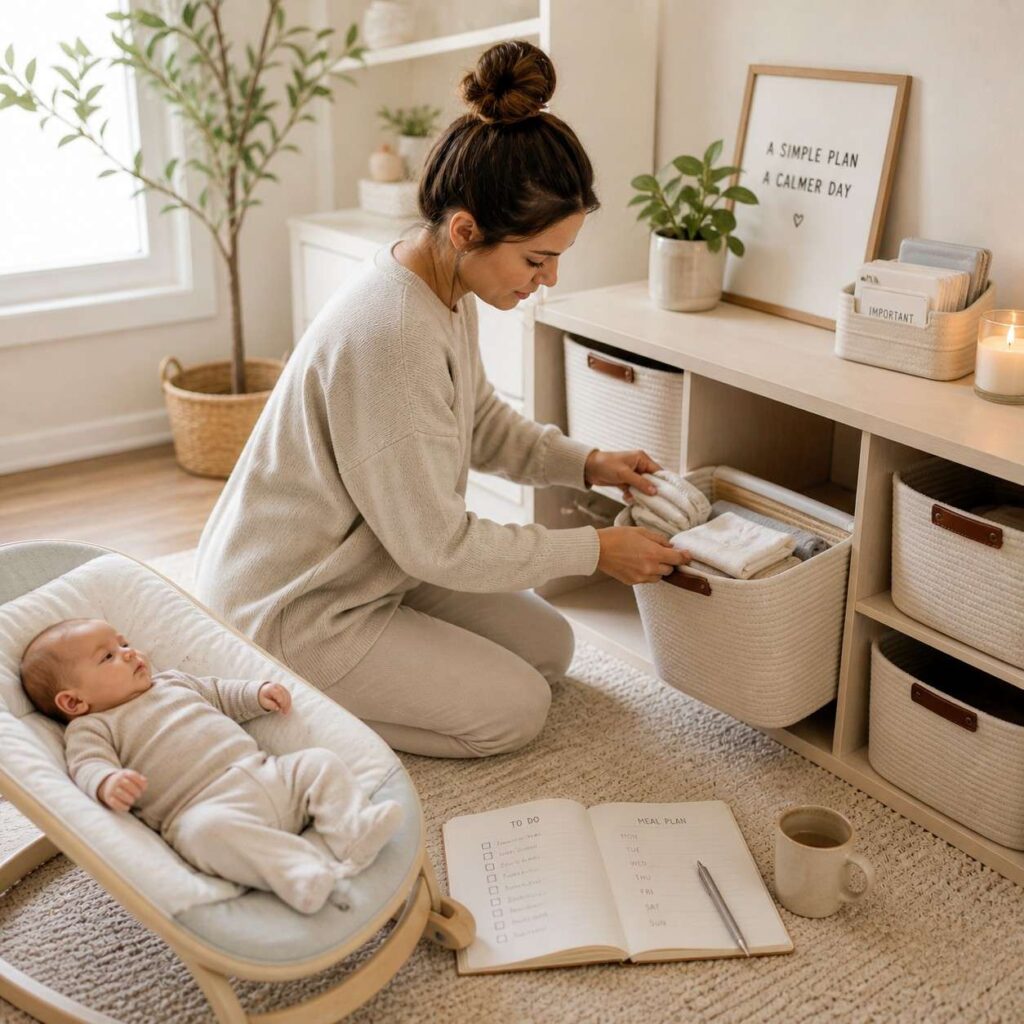
Becoming a new mother brings significant joy, but it also introduces a level of responsibility and unpredictability that can quickly feel overwhelming. Between feeding schedules, sleep deprivation, household responsibilities, and personal recovery, organization becomes less about perfection and more about creating sustainable systems. Establishing simple, realistic routines can help reduce stress, improve efficiency, and support both maternal well-being and infant care.
1. Build Simple, Flexible Daily Routines
One of the most effective ways to stay organized as a new mom is to establish a flexible daily routine. Structure provides predictability, which is especially valuable during a time when many aspects of life feel uncertain.
Rather than attempting to follow a rigid schedule, focus on creating general patterns for your day. For example, grouping similar tasks together such as feeding, diaper changes, and naps can create a natural rhythm. Over time, babies begin to adapt to these patterns, making daily life more manageable.
It is important to recognize that routines should remain adaptable. Infants go through rapid developmental changes, and their needs can shift frequently. A routine that works one week may need adjustment the next. Flexibility ensures that organization supports your life rather than restricting it.
Research-backed parenting guidance emphasizes the importance of creating manageable routines within the home environment. Establishing consistent habits can support both physical and emotional well-being for children and caregivers alike.
2. Use Practical Systems for Managing Tasks
Staying organized requires external systems, especially when mental bandwidth is limited due to sleep disruption. Relying solely on memory increases stress and the likelihood of missed tasks.
Simple tools can make a substantial difference:
- A written or digital to-do list
- A shared calendar for appointments
- A weekly planning sheet for meals and errands
Prioritize only essential tasks. New mothers often experience pressure to maintain previous levels of productivity, which is not realistic during early parenthood. Focus on what must be done rather than what could be done.
Breaking larger responsibilities into smaller steps can also improve consistency. For example, instead of planning to “clean the house,” designate one small task per day such as laundry or dishes. This approach prevents overwhelm and maintains progress.
Additionally, keeping baby-related essentials organized in designated areas such as a diaper station or feeding station reduces time spent searching for items and improves efficiency throughout the day.
3. Create an Organized Physical Environment
Your physical space plays a critical role in daily organization. A cluttered environment can increase stress and make routine tasks more difficult.
Start by simplifying your home. Remove unnecessary items and keep frequently used supplies within easy reach. For example:
- Store diapers, wipes, and clothing in clearly labeled areas
- Keep feeding supplies in one consistent location
- Use bins or baskets for quick organization
Establishing zones within your home can improve functionality. A feeding area, changing area, and rest area help create structure without requiring constant movement or searching.
Small environmental changes can have a significant impact. For instance, placing a basket with baby essentials in multiple rooms can reduce the need to move back and forth frequently.
Creating an environment that supports daily routines aligns with broader recommendations for family well-being. Structuring the home with accessible, healthy choices and organized systems helps families function more effectively.
4. Prioritize Support, Self-Care, and Reliable Resources
Organization is not solely about managing tasks. It also involves recognizing when to seek support and using reliable information to guide decisions.
New mothers benefit from building a support system that may include partners, family members, or community resources. Delegating responsibilities where possible allows for better focus on essential caregiving tasks and personal recovery.
Equally important is accessing accurate, evidence-based parenting information. The American Academy of Pediatrics provides guidance through HealthyChildren.org, a resource developed and reviewed by pediatricians. This platform offers practical advice across all stages of childhood, helping parents make informed decisions with confidence .
Taking time for self-care is also a necessary component of staying organized. Physical and emotional well-being directly affect a parent’s ability to manage daily responsibilities. Even small actions such as resting when possible, maintaining hydration, or stepping outside briefly can improve overall functioning.
Parents often face changing routines and unexpected challenges, which can impact both organization and emotional health. Awareness of these shifts and proactive support can make a meaningful difference in maintaining balance.
Conclusion
Staying organized as a new mom is not about achieving perfect order. It is about creating simple systems that reduce stress and support daily life. Flexible routines, practical task management, an organized environment, and strong support systems all contribute to a more manageable and sustainable experience.
By focusing on realistic strategies and utilizing trusted resources such as HealthyChildren.org, new mothers can build a foundation that promotes both efficiency and well-being. Over time, these systems become habits, allowing for greater confidence and stability in the transition to motherhood.